This post contains affiliate links. We may earn a commission from purchases.
A WiFi 6 mesh router can be a practical upgrade, but AX3000 describes wireless speed class—not a promise of complete mesh coverage. Here’s what the Tenda RX12L Pro listing tells a first-time buyer.
Check current price and options
What AX3000 Means on a WiFi 6 Mesh Router
AX3000 is a wireless speed class, not the size of home the router will cover.
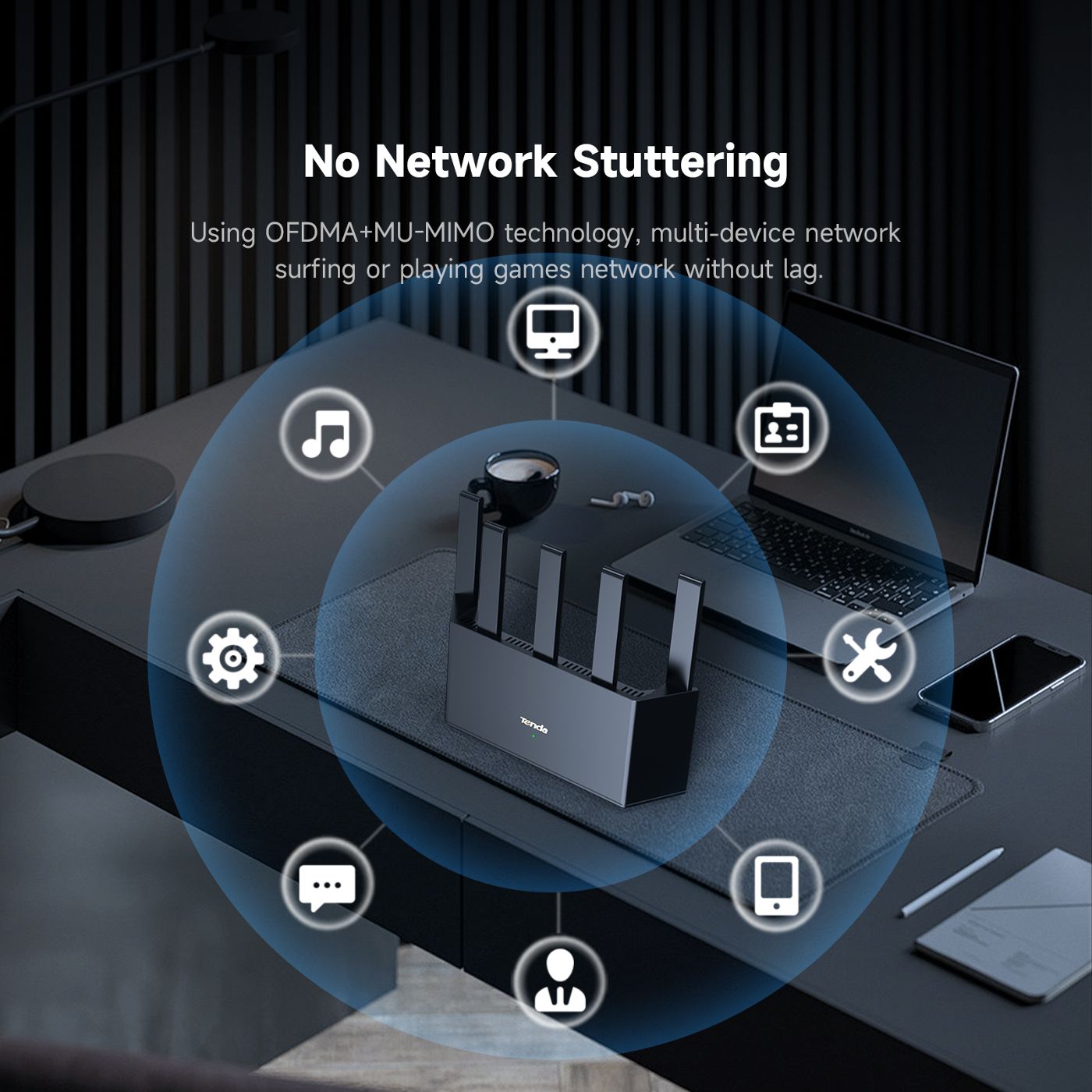
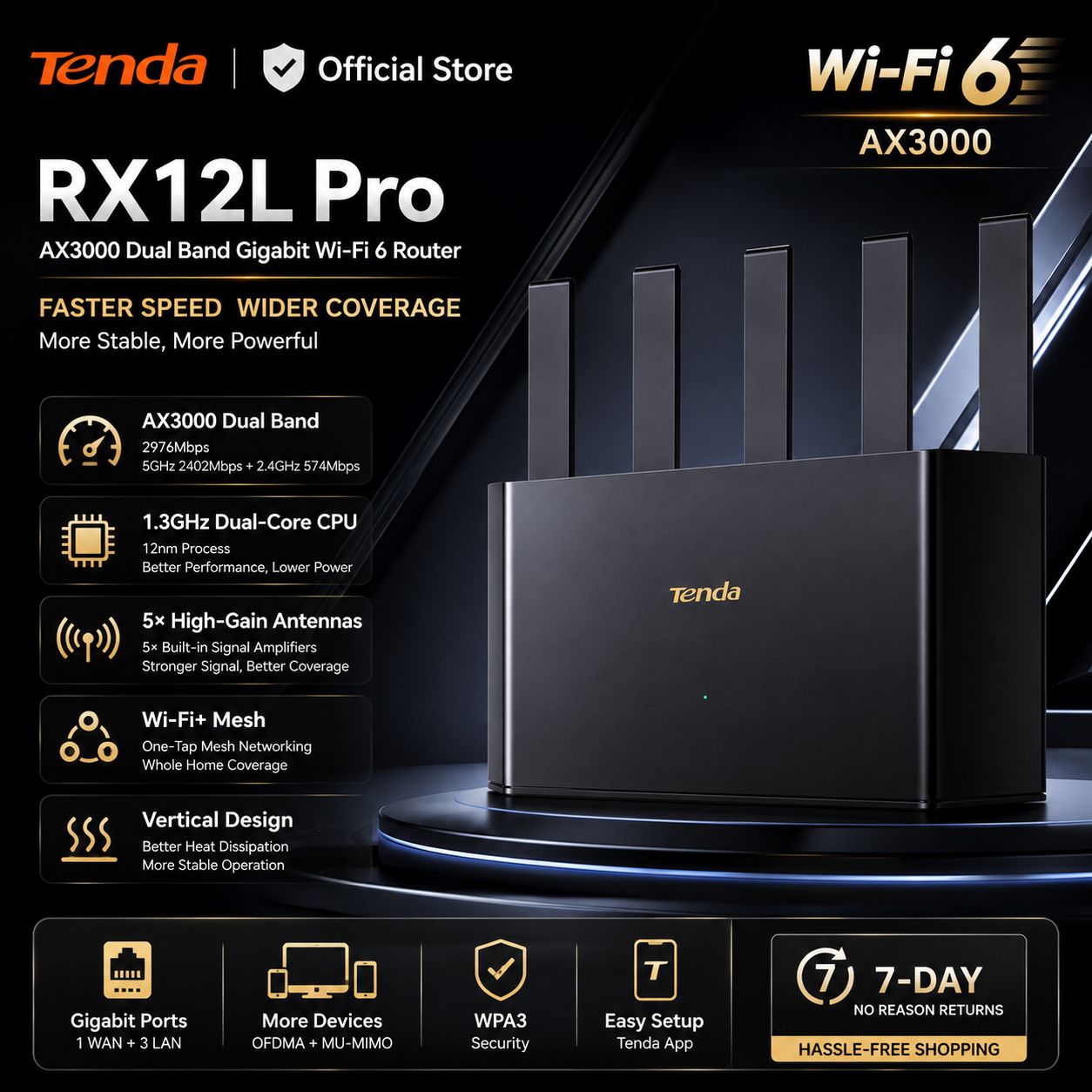
This Tenda RX12L Pro is listed as a dual-band WiFi 6 router with a stated combined rate of 2,976 Mbps, a 1.3 GHz dual-core CPU, five antennas, and Gigabit networking.
The combined number matters most as a way to compare router classes, not as a speed you should expect from one device.
Your internet plan, the devices in use, distance, walls, and the band a device connects to all affect actual results.
- WiFi 6 refers to the wireless standard.
- Dual band means the router uses two WiFi frequency bands.
- Gigabit describes wired networking capability in the listing.
- AX3000 does not mean 3,000 Mbps to every device.
The Common WiFi 6 Mesh Router Mistake
The easy mistake is treating a single router labeled “mesh” as a complete whole-home mesh system. A mesh setup normally relies on multiple compatible units placed around the home.
The product data identifies this model as a mesh router, but it does not state which additional units work with it, how many can be added, or how the mesh is configured.
Choose this type of router if you primarily need one central WiFi 6 router and want to investigate expansion later.
Skip it if your immediate goal is to eliminate dead zones across a large or multi-story home; a clearly specified multi-unit mesh kit is the more direct alternative.
What to Verify Before Ordering
The listed price is $47.87 USD, down from $51.08.
The 97.6% evaluation rate and 124 recent orders can indicate buyer interest, but they are not a substitute for confirming that the version fits your setup.
For a U.S. installation, review the selected listing option for 110/120 V power support and a U.S. -compatible plug.
Also confirm whether it meets any applicable FCC requirements, whether setup requires an app and which phone systems it supports, plus the seller’s U.S. delivery, sales-tax, and return terms.
These details are especially important for networking gear ordered internationally.